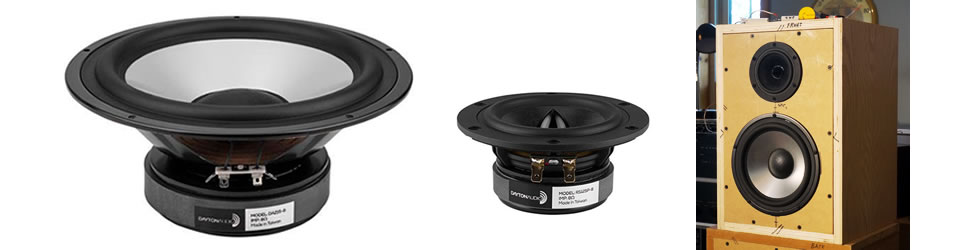
NM-5 (Natural Music)
Dayton RS125P-8 with Dayton DA215-8
Hot on the heels of the Fountek FW-100B is the Dayton RS125P-8. This 5″ reference series by Dayton has a paper cone, is blessed with a cast frame and to top it off, a central phase plug.
I first tested out this RS125P-8 in May, 2022 and came away rather pleased with her tonal qualities. I didn’t work on her further because I considered her more of a midrange, thus needing a woofer and tweeter.
Now that I’m working on a woofer assisted full range concept, it’s an opportune time to re-visit this RS125P-8.
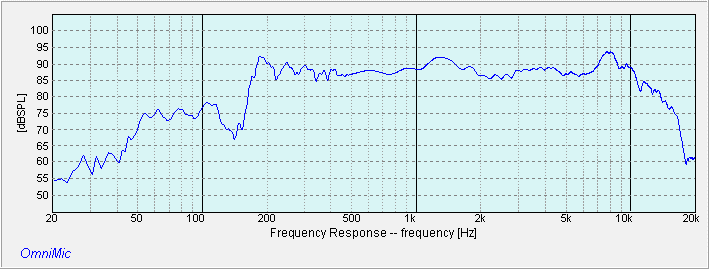 Fig 1 – Dayton RS125P-8 Frequency Response in 6L Sealed Box. Fig 1 – Dayton RS125P-8 Frequency Response in 6L Sealed Box.
Fig 1 is the RAW Frequency Response of the Dayton RS125P-8 in a 6 liters sealed box. This Dayton can easily pass as a fullrange.
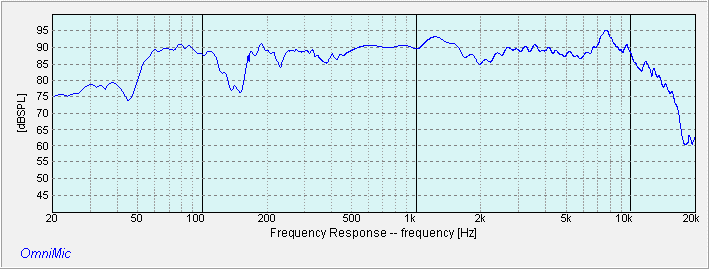
Fig 2 – MN-5 Frequency Response (Dayton RS125P-8 with DA215-8)
Fig 2 is the frequency response of the RS125P-8 with the Dayton DA215-8 doing the bass. I didn’t need to do any EQ to correct the response. It’s fairly flat as is. It would be nice if the slight bump at 1.2kHz is not there but as long as I don’t hear it, it’s fine.
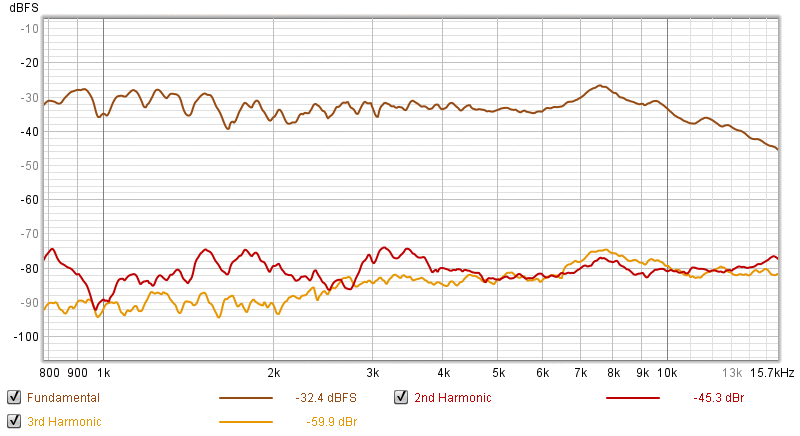 Fig 3 – NM-5 Harmonic Distortion Fig 3 – NM-5 Harmonic Distortion
The Harmonic Distortion (Fig 3) is dominated by the 2nd harmonic at -45.3dBr. The 3rd is at a low of -59.9dBr. At this level, I do not expect the harmonics to irritate my ears.
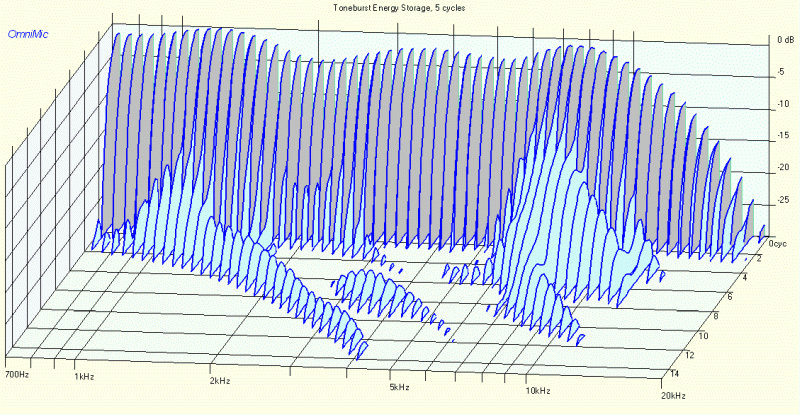 Fig 4 – NM-5 Toneburst Energy Storage Fig 4 – NM-5 Toneburst Energy Storage
When compared to the Fountek FW-100B, the RS125P-8 registered slightly more stored energy in the cone breakup peak at 7.5kHz (Fig 4). Those are the light blue slices seen from 6kHz~10kHz.
Remember the bump at 1.2kHz? It’s not just the amplitude. It seems there’s some physical excitement in the cone, hence the stored energy.
 Fig 5 – NM-5 Waterfall Fig 5 – NM-5 Waterfall
This artifacts from the 7.5kHz peak is seen in the Waterfall plot in Fig 5. They are not harmful as they don’t last long enough to be heard.
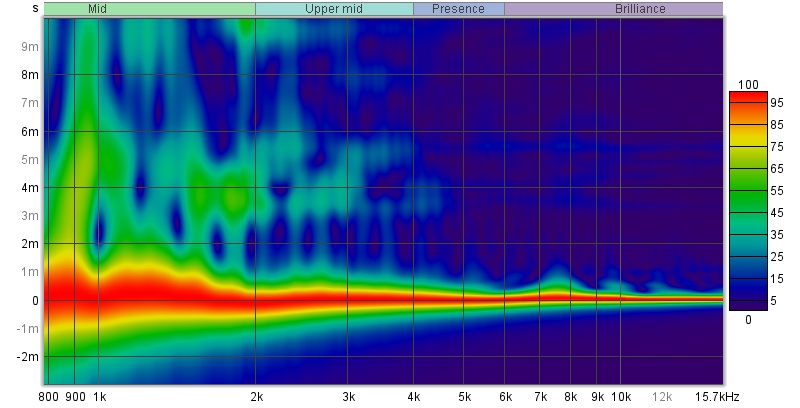 Fig 6 – NM-5 Spectrogram Fig 6 – NM-5 Spectrogram
The 7.5kHz peak doesn’t even last 1ms in the Spectrogram (Fig 6), so that’s not a problem. I’m more concerned with the bunch of green streaks from 800Hz~2kHz. Fortunately, they are dissipated by 6ms.
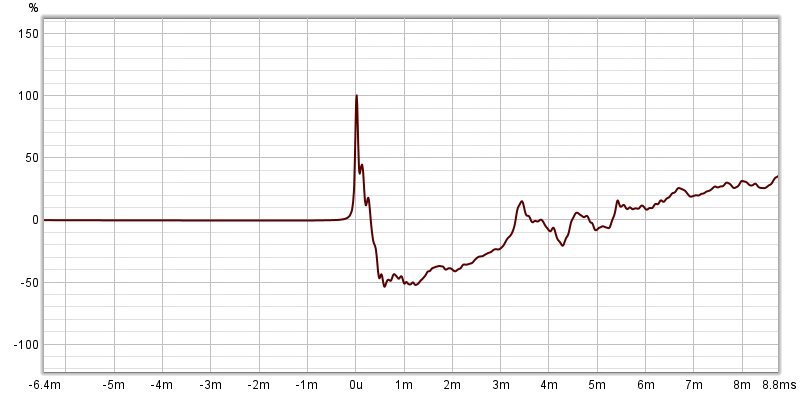 Fig 7 – NM-5 Step Response Fig 7 – NM-5 Step Response
The Step Response (Fig 7) shows the RS125-8 attack is faster than the FW-100B. Not only that, their acoustic centers are closer.
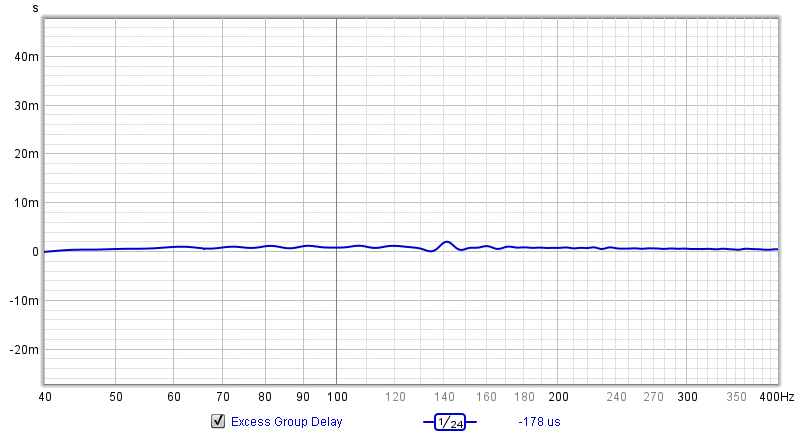 Fig 8 – NM-5 Excess Group Delay Fig 8 – NM-5 Excess Group Delay
The Excess Group Delay (Fig 8) is only -178us. This indicates the bass does not lag the midrange. Music should sound as “one”.
Summary
I auditioned this Dayton RS125P-8 with the DA215-8 for a few days and I am surprised that I prefer the RS125P-8 over the FW-100B. The reason for this is there’s a certain “Warmth” in the RS125P-8 midrange.
Right now, the RS125P-8 is on sale at Parts-Express for $34. That’s a good buy. I paid $42 a couple of years ago and after testing them, I felt there are better drivers out there for that price. Should I decide to design a 3-way in future, I will probably use this RS125P-8 for the mids.
This NM-5 is a minimalist design like the one before her, the NM-4. The crossover consists of an inductor, a capacitor and two resistors to pad the RS125P-8. I love it when I can do this without compromising the music quality. It’s not always possible.
Unless otherwise stated, all measurements were made in Full Space (4pi). Mic at 36 ins, tweeter axis. Impulse Window=5ms. No smoothing applied. |