THOR-JBL
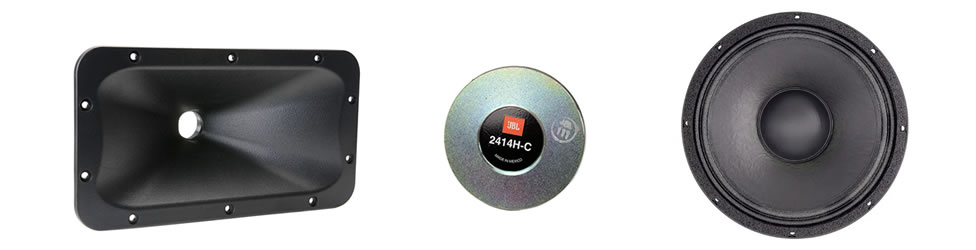
THOR12400 with JBL2414H-C/Dayton H6512
In this THOR-JBL, I decided to swap the Celestion CDX1-1446 with one of my favorite compression drivers (CD), the JBL2414H-C. This CD is used in conjunction with the JBL horn, which the Dayton H6512 is a copy of, in their JRX Series. What I like about this JBL2414 is she doesn’t exhibit the brightness that titanium diaphragms are noted for.
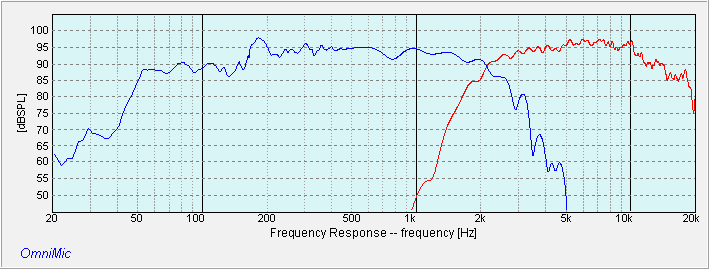 Fig 1 – THOR12400 Low Pass and JBL2414/H6512 High Pass plots Fig 1 – THOR12400 Low Pass and JBL2414/H6512 High Pass plots
The Blue plot in Fig 1 is the THOR12400 woofer with a Low Pass Network. The Red plot is the JBL2414H-C mounted onto a Dayton H6512 horn.
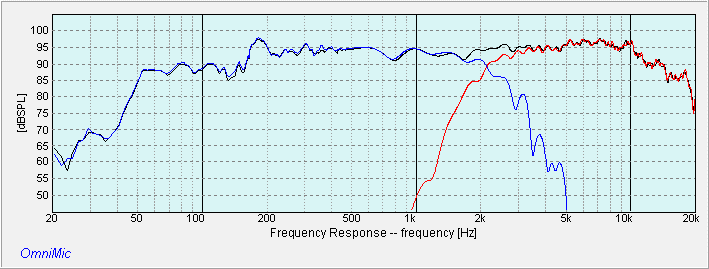 Fig 2 – Black plot Crossover Summing Region Fig 2 – Black plot Crossover Summing Region
The Black plot in Fig 2 shows the summing of the woofer and the compression driver (CD). It shows excellent summing because no cancellations are observed on either side of the crossover frequency.
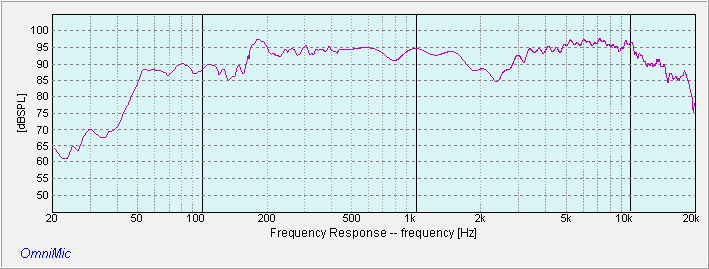 Fig 3 – THOR-JBL Pro Null Response Fig 3 – THOR-JBL Pro Null Response
Fig 3 is the Null response when the CD wires are flipped. The notch indicates the two drivers are quite well aligned, crossing acoustically at 2.3kHz.
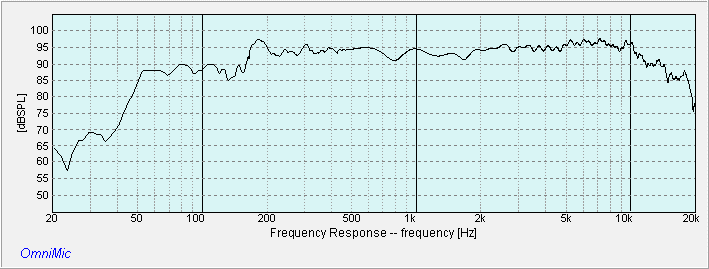 Fig 4 – THOR-JBL Pro Frequency Response Fig 4 – THOR-JBL Pro Frequency Response
The final Frequency Response is in Fig 4. The response is virtually flat from 200Hz~10kHz.
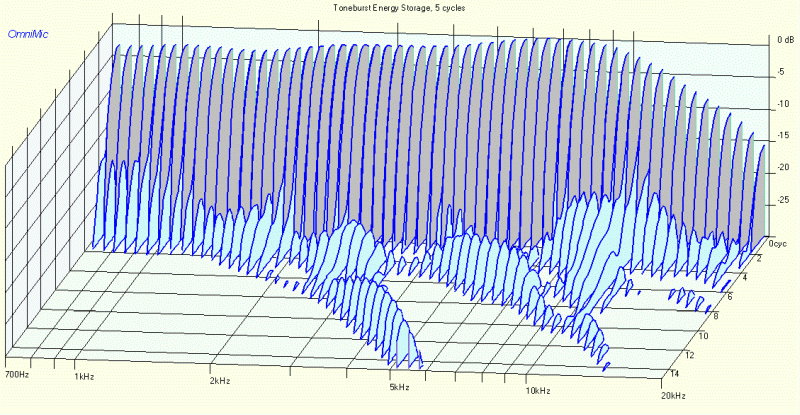 Fig 5 – THOR-JBL Toneburst Energy Storage Fig 5 – THOR-JBL Toneburst Energy Storage
The Toneburst plot (Fig 5) recorded minor stored energy (light blue slices) in the treble.
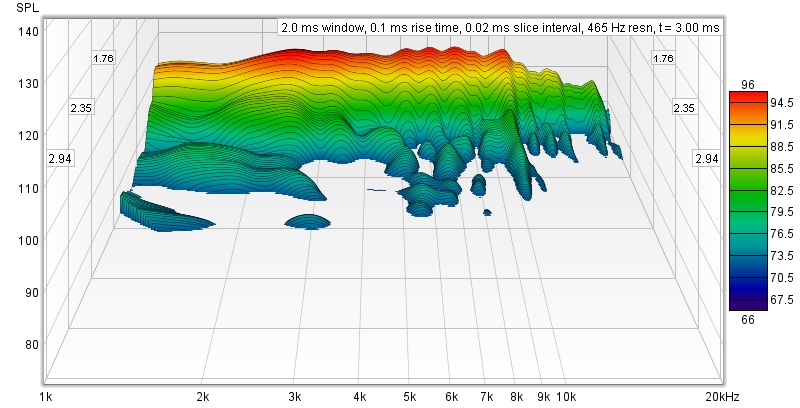 Fig 6 – THOR-JBL Waterfall Fig 6 – THOR-JBL Waterfall
The Waterfall plot (Fig 6) is another representation of the Toneburst. In this plot, the z-axis is in time (ms) instead of cycles.
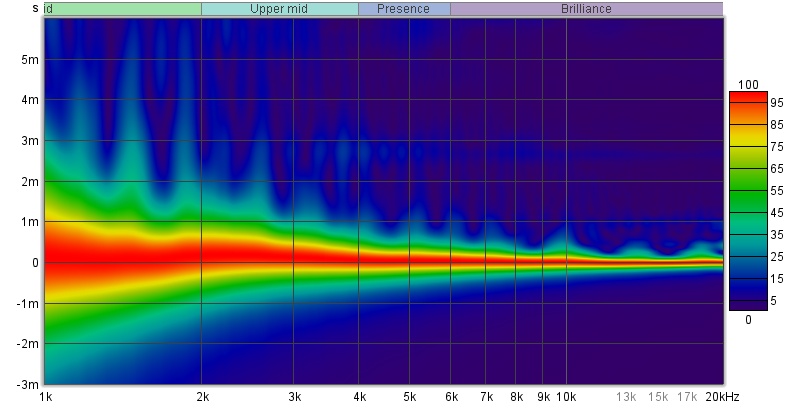 Fig 7 – THOR-JBL Spectrogram Fig 7 – THOR-JBL Spectrogram
The Spectrogram in Fig 7 clearly shows the artifacts don’t last more than 2msec.In fact, from 3kHz~20kHz, they are dissipated by 1msec. All these plots indicate a very clean treble.
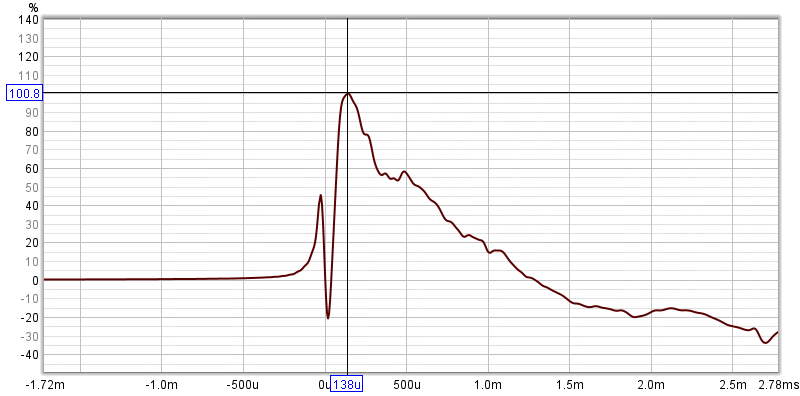 Fig 8 – THOR-JBL Step Response Fig 8 – THOR-JBL Step Response
The THOR-JBL Pro Step response (Fig 8) is relatively fast. There’s not hesitation in the leading edge of the woofer.
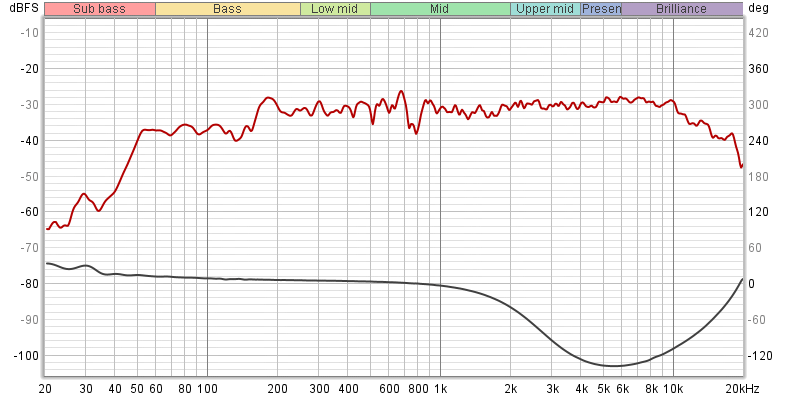 Fig 9 – THOR-JBL Excess Phase Fig 9 – THOR-JBL Excess Phase
The Excess Phase shows the CD starts to rotate from 2kHz onwards. However, the plot is smooth with no glitches anywhere.
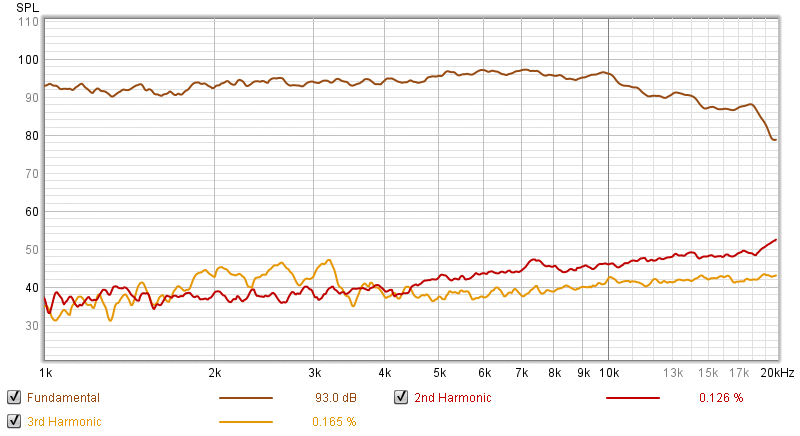 Fig 10 – THOR-JBL Harmonic Distortion Fig 10 – THOR-JBL Harmonic Distortion
The Harmonic Distortion (Fig 10) is impressively low. The 2nd harmonic is at 0.126% and the 3rd at 0.165%.
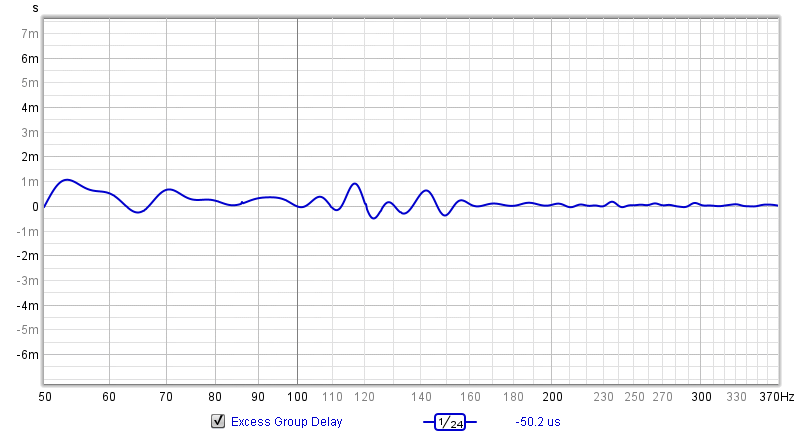 Fig 11 – THOR-JBL Excess Group Delay Fig 11 – THOR-JBL Excess Group Delay
The Group Delay registers -50.2us. The bass will not be lagging the midrange with this figure.
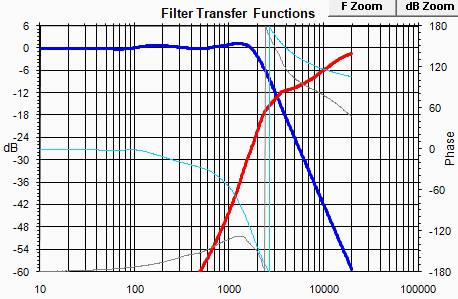 Fig 12 – THOR-JBL Transfer Function Fig 12 – THOR-JBL Transfer Function
The THOR-JBL Transfer Function is in Fig 12. In this plot, we can see electrically the two drivers are crossing at 3kHz (-12dB). This is well above JBL’s lowest recommended frequency of 2.1kHz. The JBL2414H-C should be able to withstand hard use with my crossover.
THOR-JBL Sound
The THOR-JBL met all my expectations. She sounds very dynamic and musical. Her vocal clarity is outstanding. Singers are well isolated in the mix. Voices are not shouty nor does she screech. Sibilance sounds natural and is not over-emphasized. The treble contains no harshness. In fact, she sounds very sweet.
This THOR-JBL sounds so good that I dare recommend her for HiFi. With her Sensitivity at 96dB, she’s ideal for Tube Amplifiers and Home Theater. If listeners want more bass, use a subwoofer or my BassEQ kit. I developed it specially to address this issue.
The THOR-JBL will be offered in a kit form sometime in early spring next year. It will include the THOR12400 woofer, a JBL2414H-C, a Dayton H6512 horn and a Fully Assembled Crossover on a PCB.
Unless otherwise stated, all measurements were made in Full Space (4pi). Mic at 36 ins, tweeter axis. Impulse Window=5ms. No smoothing applied. |