Dayton PS95-8
3-1/2″ Point Source Full Range
The last time I tested a Dayton Point Source was in 2023. It was the CX120-8 Co-axial, a 4″ woofer with a 3/4″ silk dome tweeter in the middle. I wasn’t too impressed with her because of her ragged frequency response. Hopefully, this PS95-8 will fare better.
For this test, I found the PS95-8 mounted perfectly in my Super-Micro 1.5 liters Sealed box. In the photo above, the Peerless tweeter is not used. I left her in there to seal up the box. Internally, I stuffed the box with “Poly-fil”.
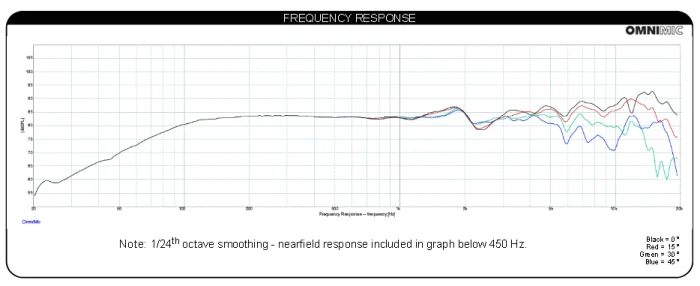 Fig 1 – Dayton PS95-8 Frequency Response Fig 1 – Dayton PS95-8 Frequency Response
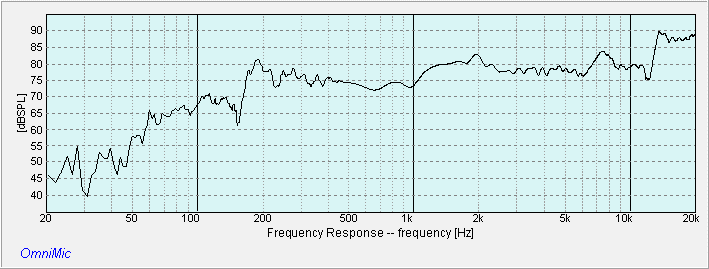 Fig 2 – PS95-8 Frequency Response at 1 meter, No Smoothing, 5ms Window Fig 2 – PS95-8 Frequency Response at 1 meter, No Smoothing, 5ms Window
Fig 1 is the frequency response of the PS95-8 from Dayton’s datasheet. Fig 2 is my measurement in my 1.5 liters box.
The response from 1kHz~10kHz is not too bad. My only concern is the peak at 2kHz. After 10kHz, the cone breakup can be seen when the frequency suddenly shot up. We can expect some strong artifacts in the Waterfall.
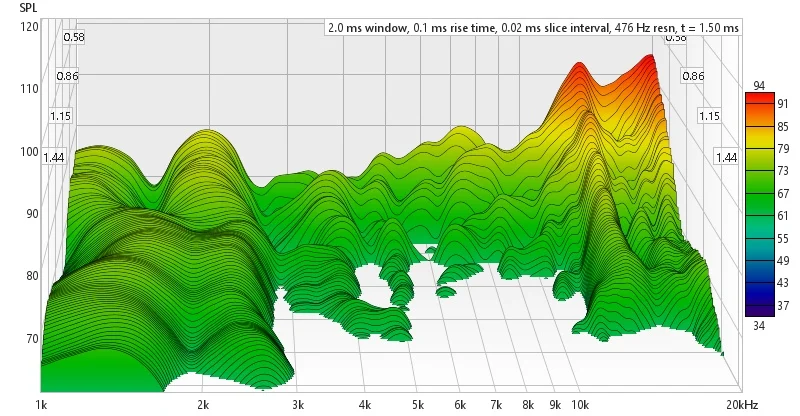 Fig 3 – PS95-8 Waterfall at 1 meter, No Smoothing, 5ms Window Fig 3 – PS95-8 Waterfall at 1 meter, No Smoothing, 5ms Window
As expected, the Waterfall (Fig 3) recorded a bunch of artifacts from 10kHz~20kHz. I wouldn’t worry too much with this because they are very weak. The one that bothers me is the peak at 2kHz.
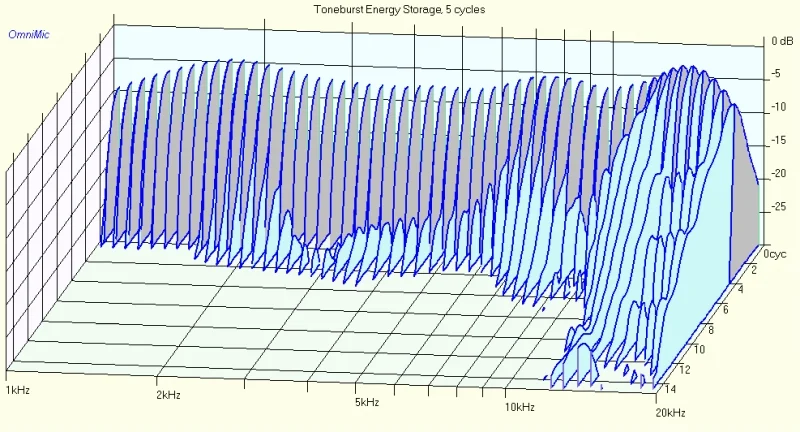 Fig 4 – PS95-8 ToneBurst Energy Storage at 1 meter Fig 4 – PS95-8 ToneBurst Energy Storage at 1 meter
Fig 4 is the ToneBurst Energy Storage plot. The artifacts at 10kHz~20kHz are seen as a bunch of light blue slices. They don’t last very long because the z-axis is in cycles and not time like in the Waterfall. It is the ones at 2kHz that need further investigation.
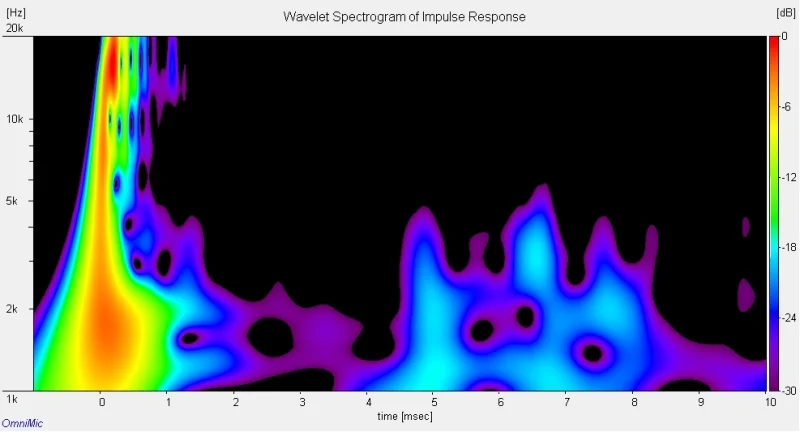 Fig 5 – PS95-8 Wavelet at 1 meter Fig 5 – PS95-8 Wavelet at 1 meter
The Wavelet in Fig 5 gives a better picture of whether there’s any smearing in the response. The cone breakup from 10kHz upwards is inaudible because they don’t last more than 1ms. The one at 2kHz, on the other hand, stretches to 10ms. Even then, I doubt they will affect the sound.
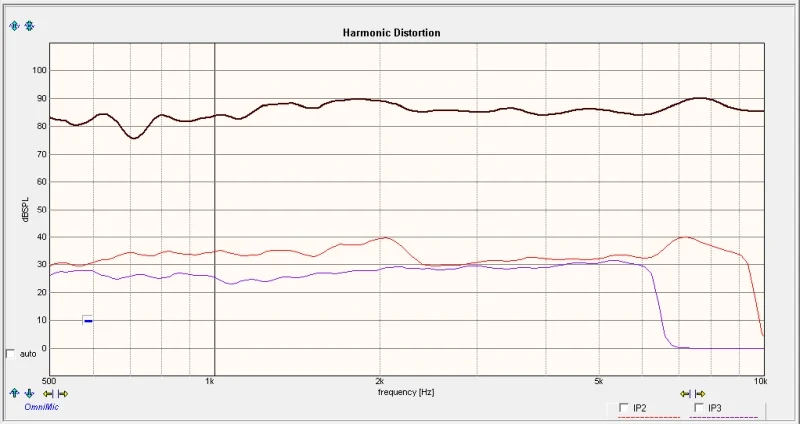 Fig 6- PS95-8 Harmonic Distortion at 1 meter Fig 6- PS95-8 Harmonic Distortion at 1 meter
The Harmonic Distortion (Fig 6) is quite impressive. Generally, the 2nd and 3rd harmonics are about -50dB below the fundamental. The all important 3rd is below the 2nd. This is a good sign.
Adding a Sub
The PS95-8 needs a subwoofer to complete the bandwidth. Without one, the music is impossible to listen to.
Since I have an 8″ Dayton RS225-4 already mounted in the Finch-IIIA, I hooked her up with a 24dB/oct electronic crossover at 150Hz low pass.
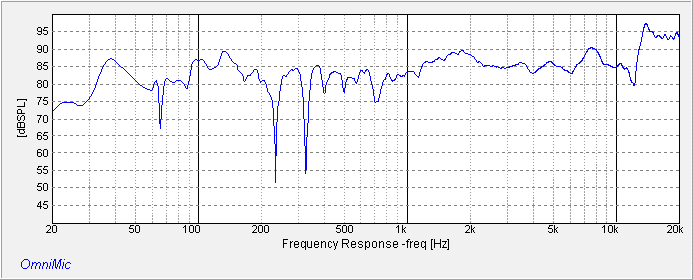 Fig 7- PS95-8 with RS225-4 Frequency Response. No Smoothing Fig 7- PS95-8 with RS225-4 Frequency Response. No Smoothing
Fig 7 is the final frequency response of the PS95-8 with the RS225-4 subwoofer in support. The bandwidth now extends to 35Hz. This is exactly what I want when listening to music.
Ignore the two deep notches at 230Hz and 320Hz. Anything below 1kHz includes the room’s reflections. The reason I recorded the response down to 20Hz is because it gives me a rough idea as to what is happening.
Sound of PS95-8 with RS225-4 Sub
The PS95-8 with the RS225-4 sound incredible. Actually better than the previous array with the HiVi C3N-III and that says a lot.
In this design, I did not need to add a tweeter because the PS95-8 on her own sounds just fine. The burst in the super-treble is inaudible. There’s no brittleness or harshness.
Vocals are surprisingly transparent. With the C3N-III array, I had to add a tweeter for her to sound this way.
With regards to the peak at 2kHz, I did not detect any smearing. If anything, it is to my advantage because it added a bit of presence in the vocals.
At the lower end, the RS225-4 continue to amaze me. She is articulate in the upper bass, yet goes deep enough to 35Hz. I can’t ask for more from an 8″.
Summary
I thought the C3N-III array was good but after working on this PS95-8, I must admit this is a better design. Firstly, she’s cheaper. The PS95-8 cost only $30 and best of all, no tweeter is required. She sounds just as good or better than the C3N-III array with the TN28 tweeter.
The PS95-8 need not be in a separate housing like what I did. She is small enough to be mounted on the same baffle as the RS225-4. Just build a small chamber behind her and you’re good to go.
However, there is one aspect the C3N-III Mini-Array excels over the PS95-4 and that is in projection ( “throw” ). If your listening position is more than 10 feet away, the Mini-Array is a better choice.
Whichever design you decide on, both offer excellent sound quality with minimal cost.
Unless otherwise stated, all measurements were made in Full Space (4pi). Mic at 36 ins, tweeter axis. Impulse Window=5ms. No smoothing applied. |
