GRS PT6816-8 Dipole with Dayton E180HE
Active Bi-amped
Since I already have the E180HE mounted, it’ll save a lot of time if I just use her with the PT6816. My intention is simply to hear the performance of the PT6816 planar. If this combination is not to my liking, I will find another woofer.
For this review, I’m using an electronic crossover (24dB/oct) to cross the woofer and the tweeter at 700Hz. This is the fastest way to evaluate drivers. If I like what I’m hearing, I can then proceed with a passive design.
 Fig 1 – E180HE = Blue plot | PT6816 = Red plot Fig 1 – E180HE = Blue plot | PT6816 = Red plot
The Blue plot in Fig 1 is the response of the E180HE crossed at 700Hz. The Red plot is the PT6816 crossed at the same frequency. It is encouraging to see the two drivers crossing at about 700Hz. Equally important is the smooth roll-off of the drivers.
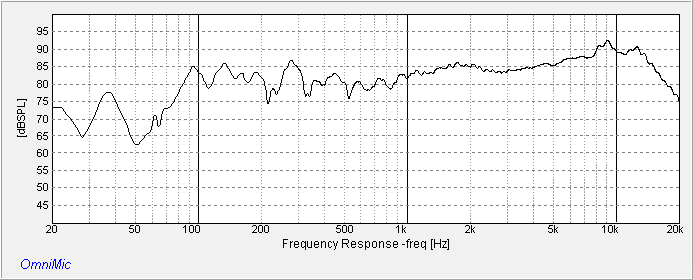 Fig 2 – Summed Response of E180HE with PT6816 (inverted polarity) Fig 2 – Summed Response of E180HE with PT6816 (inverted polarity)
Fig 2 is the frequency response of the two drivers. This is with the PT6816 wired in reversed phase. Please note that at 700Hz and below, the measurements recorded my room reflection. Above 700Hz, the plot is in Quasi-anechoic (that is no reflections).
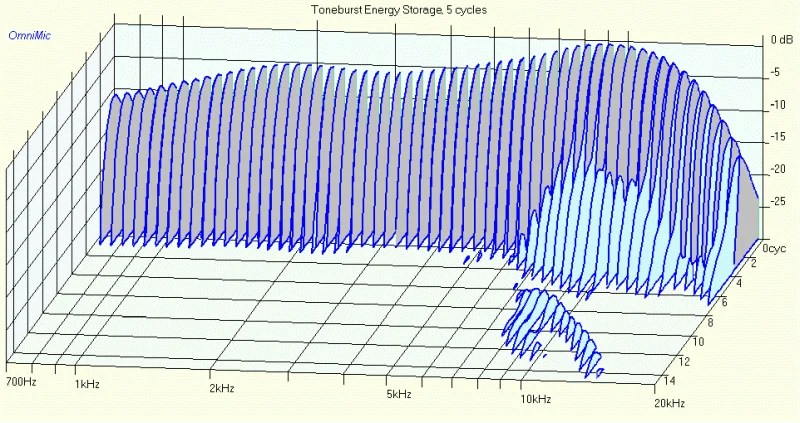 Fig 3 – Toneburst Energy Storage Fig 3 – Toneburst Energy Storage
The Toneburst plot (Fig 3) shows virtually no artifacts from 1kHz~6kHz. This is quite an incredible performance. What it shows is the E180HE woofer does not interfere with the treble.
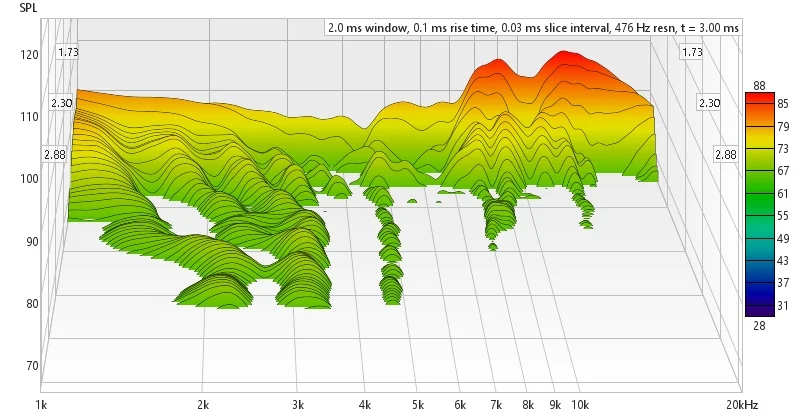 Fig 4 – Waterfall Fig 4 – Waterfall
The Waterfall plot shows minor artifacts from 2kHz~5kHz.This is inaudible because my time (t) is at 3ms.
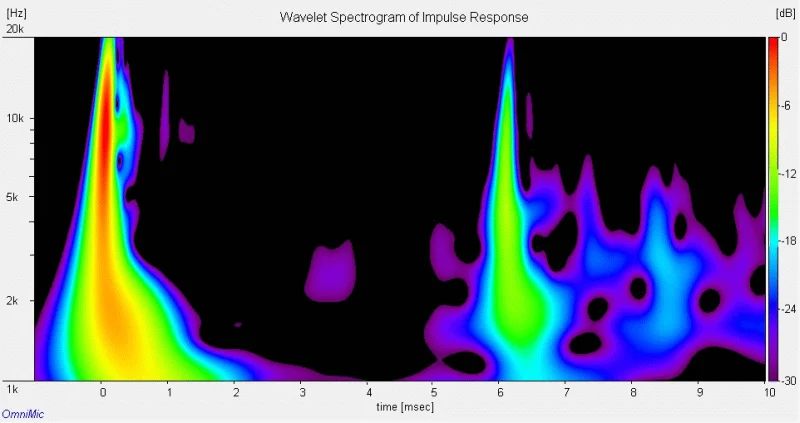 Fig 5 – Wavelet Fig 5 – Wavelet
I am seeing the same reflection in the dipole tweeter. Whether this is objectionable is left to be seen.
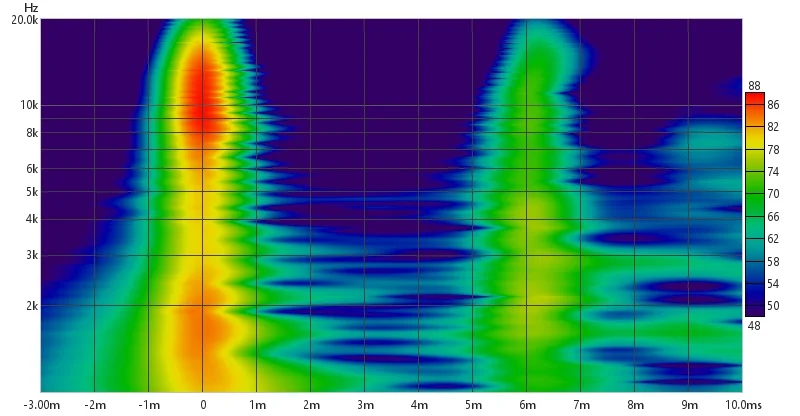 Fig 6 – Spectrogram (REW) Fig 6 – Spectrogram (REW)
Here is another view, this time with REW. The reflection is recorded at 6ms, same as in Fig 5. To minimize this reflection, the dipole must be farther away from the back wall. Whether that’s practical is another matter. As is, it’s already 4ft away.
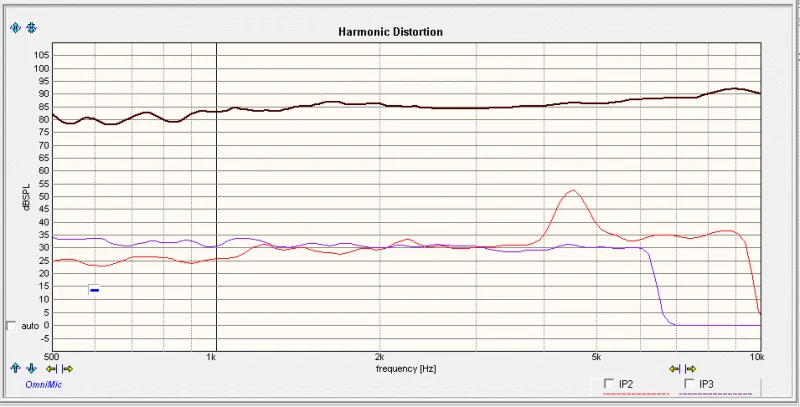 Fig 7 – Harmonic Distortion Fig 7 – Harmonic Distortion
The Harmonic Distortion is quite good. Generally, the 2nd and 3rd are about -50dB below the fundamental. What is strange is the peak at 4.5kHz. Fortunately, that’s a 2nd harmonic. During auditioning, I did not detect any issues.
Sound of PT6816 with E180HE
What I discovered in this audition is something I’ve not encountered before. I shall start with the PT6816 dipole planar tweeter. I’ve never been a fan of dipoles (open baffle) for the simple reason that most woofers are not designed to be used without an enclosure. Because the rear is open, the woofer will “flap” violently. The higher the power, the worse it gets.
I actually did some tests a few years back with a 5″ woofer in open baffle. The lower region, from 80Hz up to 200Hz, did not sound right. In fact, I could hear the woofer ringing. When I measured it, true enough, the ringing was quite bad. That confirmed my suspicion that dipoles are not for woofers unless they are specially designed for it.
The GRS PT6816 is a totally different story altogether. Firstly, it’s a tweeter and a planar at that. The weight of the membrane is very light and the energy required to move it is small. So, it’s worth testing out this PT6816 in a dipole. If she doesn’t work, I can always close her back.
When I first heard this planar dipole, I was shocked. Never did I imagine she will sound this wonderful. There is this clarity that’s missing in normal tweeters. Best of all, she doesn’t sound uncomfortable being crossed at 700Hz. This opens up new opportunities in speaker designs. Mind you, I have to use a 2″ compression driver like a JBL 2445, to get her down to 700Hz. None of my HiFi tweeters goes this low.The lowest is my Wavecor TW030WA12 which goes down to 1.5kHz.
Up next is the performance of the E180HE woofer. I was not too impressed by her in my previous review because her bass was too bloated for my taste. In making the current measurements, the E180HE is about 40″ above the floor. To my surprise, she sounded acceptable. The bass notes are much clearer compared to when she was 14″ from ground level, simulating speaker stands. Not as good as say the Seas U22REX but at least the bass is there. This discovery has real practical implications because in say a pub, where the speakers are placed about 7 feet high, the bass will be very lacking with most woofers. No so with the E180HE.
Summary
This evaluation has thrown up a few surprises.The PT6816-8 is one of the best tweeters I’ve tested. Considering she cost only $53, her performance is superb. I have tweeters that cost double and yet still loses out to this GRS planar.
As for the Dayton E180HE, her low bass (35Hz~40Hz) is thunderous in a Bass Reflex. She’s a good choice if you are looking for a compact subwoofer for your Home Theater. However for music applications, she’s sensitive to placement in your room. You just can’t place her on a speaker stand and expect exceptional bass.
Now that I have tested out the Dipole GRS PT6816-8, I am excited about what I can do with her. The picture that comes to mind immediately is a horizontal MTM. This would be ideal for commercial establishments like pubs, restaurants and fashion boutiques. Any outlets where quality music is part of the business.
For home applications, a vertical array of 5″ woofers flank by an array of PT6816 is an exciting option. Such designs are usually very costly but it can be done affordably with the PT6816.
Unless otherwise stated, all measurements were made in Full Space (4pi). Mic at 36 ins, tweeter axis. Impulse Window=5ms. No smoothing applied. |
