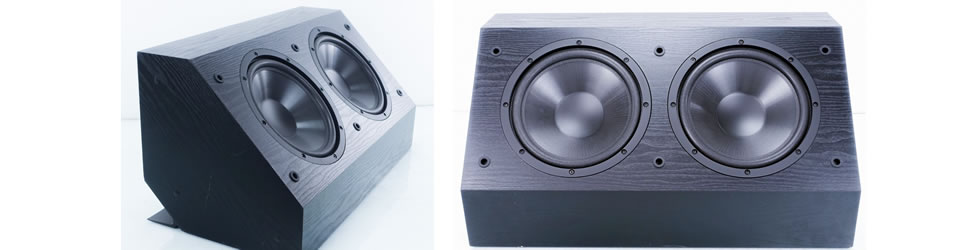
Infinity SSW-210 Servo Controlled Subwoofer
Below is an excerpt from Infinity explaining the Servo Control in their subwoofers.
That’s quite a mouthful. In simple terms, the Servo Controlled is Motional Feedback (MFB). This was invented way back in 1958 by G.H. Brodie. In 1968, Philips, a Dutch giant at that time, was the first company to commercialize Motional Feedback loudspeakers. This was under the leadership of Piet Gouw who was heading the High Fidelity Group then. The first loudspeaker was the RH541, a 7″ woofer with a 1″ tweeter. Other models followed, the RH544, AH567, RH532 and their flagship RH545. Eventually, Philips had to abandon Motional Feedback loudspeakers because they were too expensive to manufacture. It never gained any traction in mainstream audio after that. The concept was languishing in the margins of audio for decades. Today, only a few brands are keeping MFB alive.
The plots above are from Philips Technical Review regarding MFB (Fig 2). Plot a is the response of a speaker in a closed box of 10 liters. This is without MFB. Plot b is with Acceleration Feedback. Plot c is with Acceleration and Velocity feedback. This is what the designers strive for, Plot c.
Fig 3 above is the Infinity SSW-210 Servo Controlled Subwoofer circuit. The MFB mechanism are in the Blue boxes. The Bridge and Current Sampling outputs are directed to an on-amp (Orange lines). The output is then added to another op-amp at the positive terminal. What this means is the preamp signal now has the MFB added to it before it enters the amplifier proper. In doing so, the objective is to attain Plot c response (Fig 2).
It is interesting that in 1992, approximately 2 years after the Servo Controlled models (1990), Infinity simplified the SSW-210 with the circuit above (Fig 4). In this newer version, they did away with the Bridge in the MFB circuit but did retain the Current Sampling mechanism. The discrete power amplifier is now replaced with a STK 4050V module. Infinity also dropped the Servo-Controlled labeling with this line. Their manual is simply Infinity SSW-210 Subwoofer. Summary Infinity should be applauded for their efforts in promoting Motional Feedback in their subwoofers. Perhaps the lack of success is there are other alternatives to achieve similar bass response without the complexity. For example, a bass reflex can easily achieve Plot c. One can argue that there are phase distortions, etc in using a bass reflex but it’s a moot point if the user cannot tell the difference. On the practical side, a MFB subwoofer will be smaller in volume than a bass reflex because it’s designed for a closed box. As such, the F3 will be higher than a BR. To get the bass extension the MFB promises, one can easily resort to EQ or a Linkwitz Transform Circuit. This has always been a conundrum in audio. Technically, something is better but realistically, can we hear the improvement. It is the same for power amplifiers. Can one tell whether 0.001% THD is better than 0.1%? Maybe there’s more to THD that defines the sound. |
September 6, 2025Amplifiers, Electronics


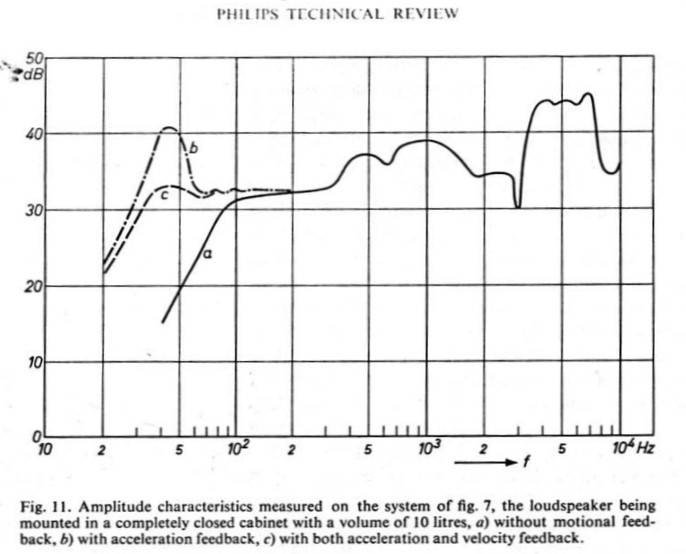 Fig 2 – Philips plots on Motional Feedback (MFB)
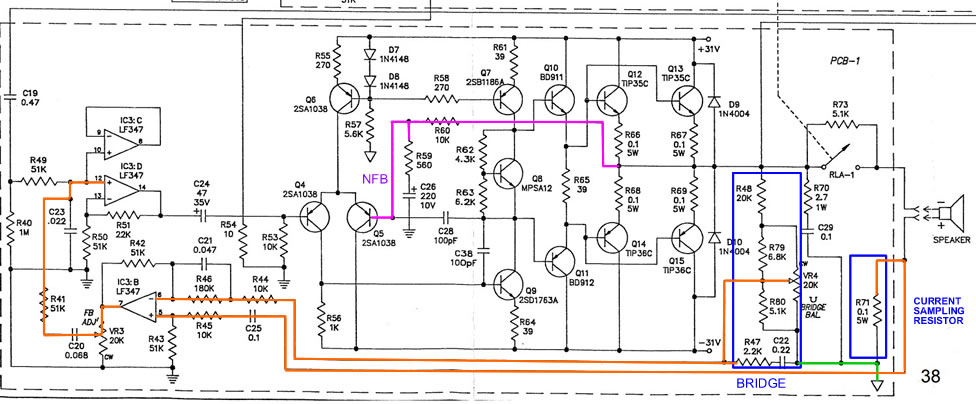 Fig 3 – Infinity SWW-210 MFB Amplifier Schematic
 Fig 4 – Infinity SSW-210 using STK 4050V (1992)