Spice – Ampeg SVT-4 Pro
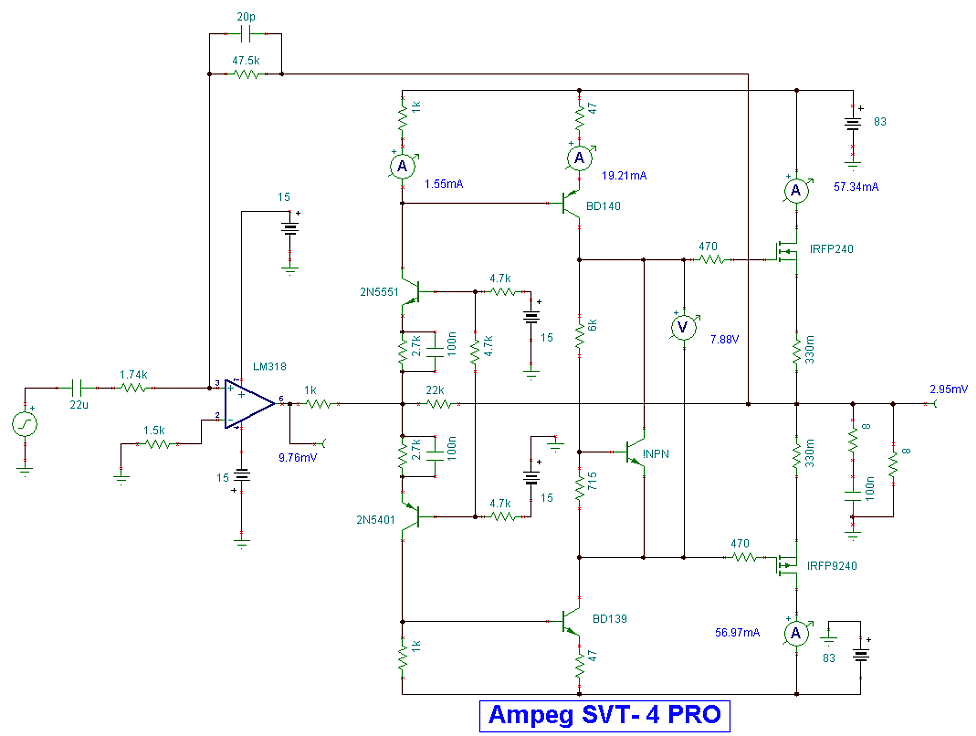
Fig 1 is the basic circuit of the SVT-4 Pro. Crucial to this type of typology is the first set of transistors. The top half is the current source for the bottom half. Vice versa, the bottom half acts as a current sink for the top. It is imperative that both halves must be exactly the same otherwise the circuit will not work properly. In this stage, the standing current is 1.55mA. This is a good value for the standing current. The amplified voltage is then fed to the VAS. This is the second voltage stage. Over here, the standing current is 19.2mA. The strength of this current is important because the power mosfets are driven directly by the VAS. As can be seen, no drivers are used. The bias adjustment and thermal sensor is located in this stage. I’ve simplified it to a single transistor instead of two as in the SVT-4 Pro schematic. Using a BJT here may not be the best option as it will over-compensate when the heatsink gets hot. Maybe that’s what is desired in pro use but for HiFi purposes, better tracking can be achieve by replacing the BJT with an IRF type mosfet.
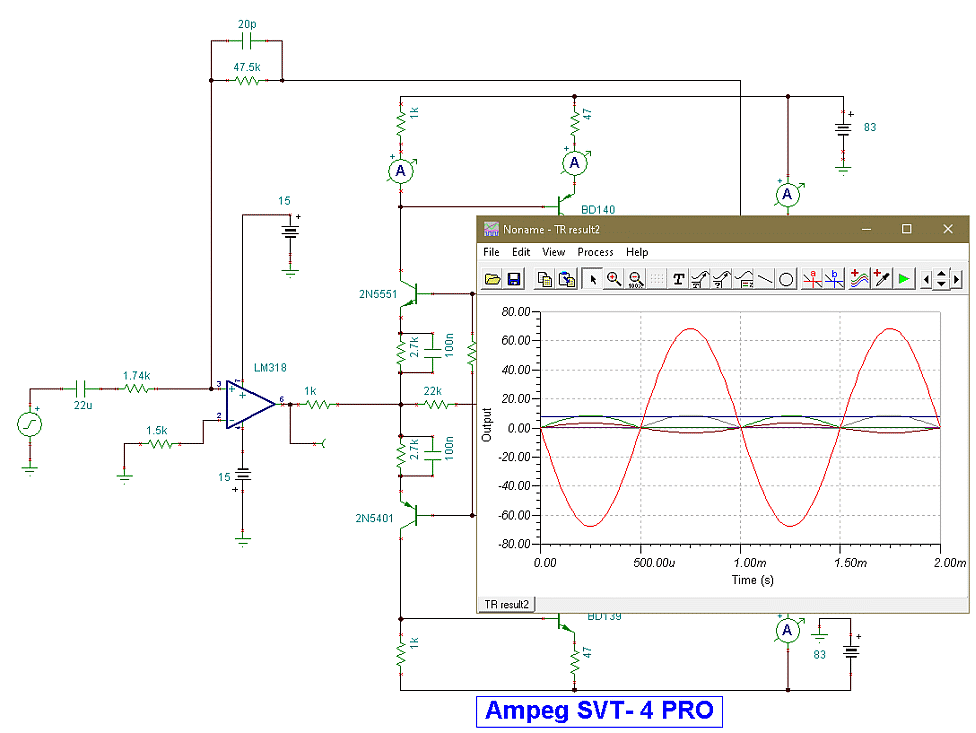
Fig 2 is the Transient analysis of the SVT-4 Pro. I’m able to swing to almost 80V peak with a 8Ω load. For this output, the input signal is at 2.5V. This is rather high because the internal gain of the amplifier is 27X only. Summary Having Spiced this Ampeg SVT-4 Pro successfully, I’m quite impressed with the circuit. However, it bewilders me as to why some pro amps use mirror image typology. Personally, I prefer a less demanding fully discrete design, that is one with no front end op-amp. They are easier to control and more tolerant to abuse. When I have the time, I will prototype this circuit. First with IRFP240/9240 for outputs and after that with some BJTs. |

September 28, 2025Amplifiers, Electronics