|
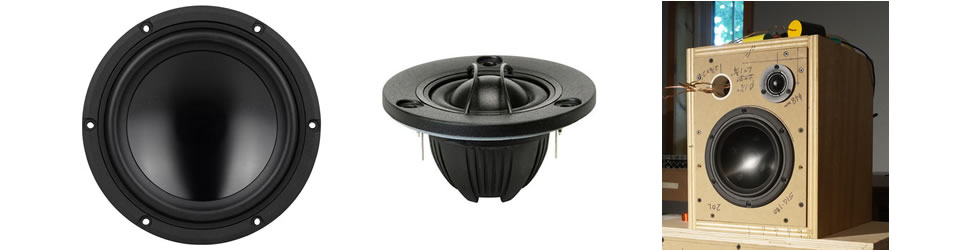
Having tested out the Dayton SIG180 and the Peerless NE25VTS, it’s time to work on a 2-way. This is a first for me because I’ve never heard neither of them before.
I started out with the SIG180. I wanted to avoid the 3kHz bump as much as possible because of the 3rd harmonic distortion that’s recorded in my previous review. The Black plot in Fig 1 is the RAW response of the SIG180 loaded onto a 20 liters bass reflex. The Blue plot is with her Low Pass network. Her 3kHz bump is down by -12dB. Hopefully, her distortion will not intrude into the treble.
My next step is to work on the NE25VTS tweeter. The Black plot in Fig 2 is the RAW response with her surface mounted. The Red plot is with her High Pass network installed. I didn’t have to use a conjugate network (LCR) to flatten her impedance peak at 700Hz because at that frequency, she is already -15dB below her fundamental.
Fig 3 contains the SIG180 Low Pass and the NE25VTS High Pass plots. Acoustically, they are crossing at about 1.8kHz.
The Violet plot in Fig 4 is Null response when I wired the tweeter in inverted phase. It resulted in a deep notch centered at 1.85kHz. This proves the woofer and the tweeter are perfectly aligned at the crossover.
.The Black plot in Fig 5 shows the summation of the crossover. No cancellations are observed in the crossover region.
The Grandala final Frequency response is in Fig 6. She is exceptionally flat from 200Hz to 20kHz (+- 2.5dB). There is a slight dip at 3.5kHz which is unavoidable due to the nature of the tweeter.
The main artifact is at 1.5kHz (Fig 7). Above that, they are minor and will not pose any issues.
The Toneburst plot (Fig 8) recorded few artifacts (light blue slices) in the treble.
The Spectrogram (Fig 9) shows the artifacts from 2kHz onwards dissipated by 2 msec. I can look forward to hearing a “sweet” tweeter.
Fig 10 is the Grandala Step response. From this plot, we can see the woofer and tweeter are wired in absolute phase. The arrival time of the woofer is 400 microsec behind the tweeter. The SIG180 is not as fast as I would like her to be possibly due to her Mms of 19.2 grams. However, there are some redeeming features. Her attack and decay are smooth, indicating the cone travel is very well control.
The Grandala Harmonic Distortions are generally low. 2nd harmonic is at -47dB below the fundamental, while the 3rd is at -50.8dB. Strangely, there’s an anomaly between 2kHz to 3kHz. Across that range, the 3rd harmonic is +10dB higher than the 2nd. It appears the SIG180 distortion is still there. Sound of Grandala What is outstanding with the Granada is her midrange. Vocals are crystal clear and jump out of the mix. I tested her out with the following tracks and the voices sound eerily real. • Amanda McBroom – Fools for Love, Ghost in This House Summary When I first started with the audition, the Grandala was awful. Her distortion was so high that it hurt my ears. I thought I had a faulty SIG180. This happened before with my Dayton D250P compression driver and the Dayton MB1025 10″ pro woofer. I was about to discard this design but I recalled coming across such situations before. I decided to leave her playing music 24/7 while I worked on my next project. True enough, after a week, her distortion vanished. I was then able to do some critical listening and was rewarded with one of the best midrange I’ve ever heard. Very “clean” and revealing. Like looking through a microscope. Bass is slightly lacking because without a baffle step compensation network, her bass is -5dB below the midrange (Fig 6). This is not really an issue for the Grandala was measured in Full Space (4pi). When she’s on speaker stands or up against the rear wall, her bass would be louder. If her bass is still not loud enough, add a subwoofer. That will easily extend her bandwidth down to 40Hz. There’s one feature the Grandala has going for her and that is her sensitivity. She’s about 91dB, same as the Peerless NE25VTS tweeter. A little bit of power is pretty loud. Great for tube amps. Unless otherwise stated, all measurements were made in Full Space (4 pi) with the mic at 36 ins, tweeter axis. Impulse Window=5ms. No smoothing applied. |
July 26, 2026HIFI DRIVERS, Projects
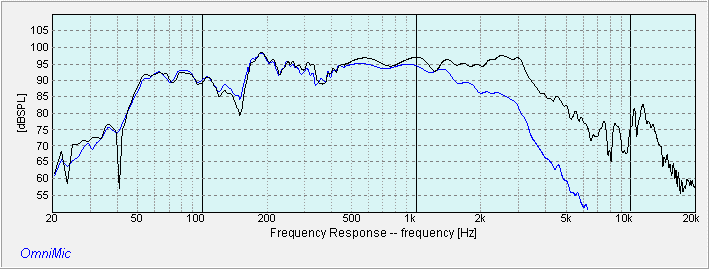 Fig 1 – Dayton SIG180-4 RAW and with Low Pass • No Smoothing • Baffle Width=10.5″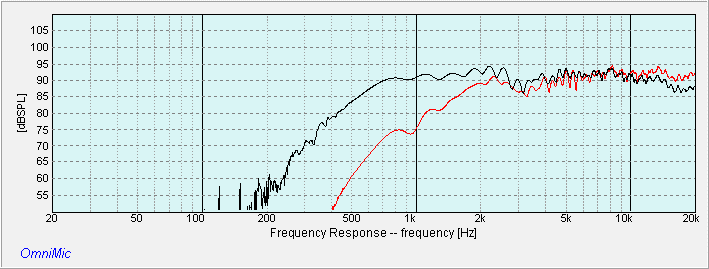
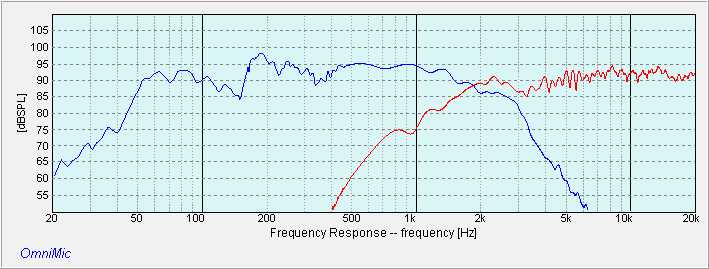 Fig 3 – Dayton SIG180 Low Pass • Peerless NE25VTS High Pass
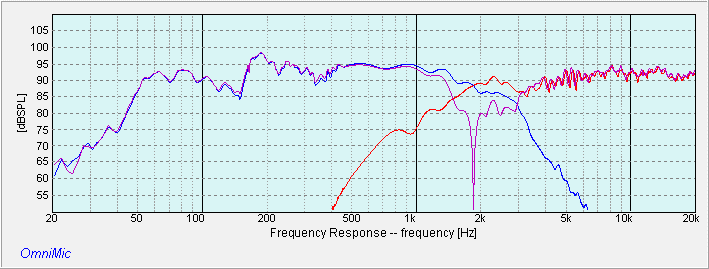 Fig 4 – Null response (Violet plot)
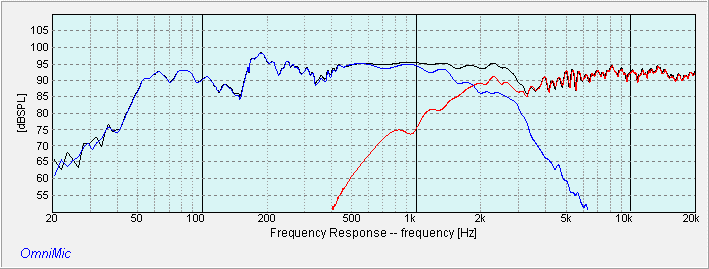 Fig 5 – Crossover Summation (Black plot)
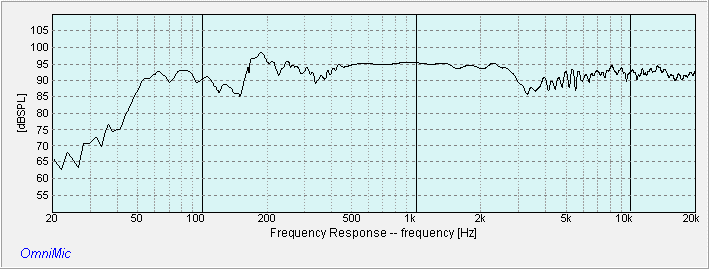 Fig 6 – Grandala Frequency Response
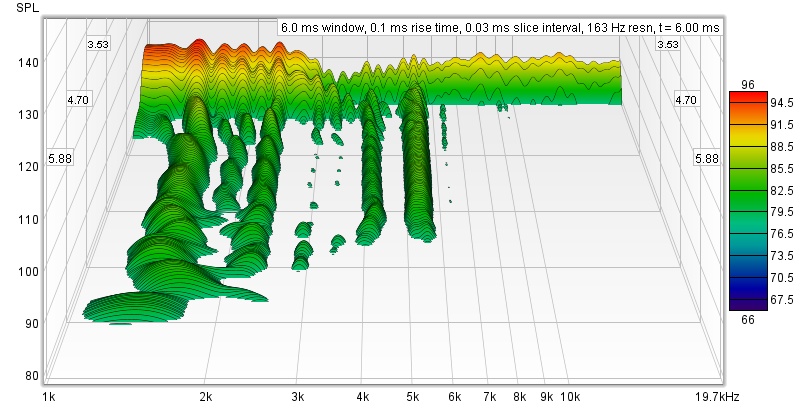 Fig 7 – Grandala Waterfall
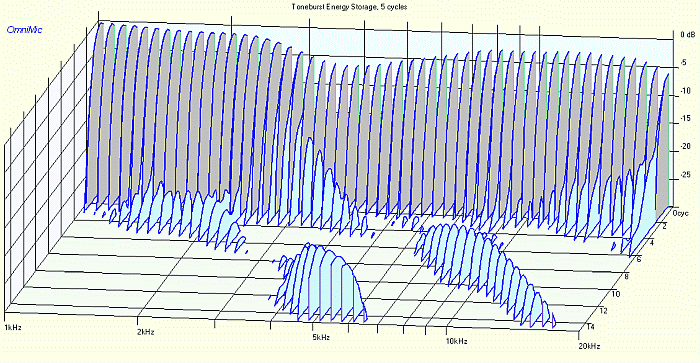 Fig 8 – Grandala Toneburst Energy Storage
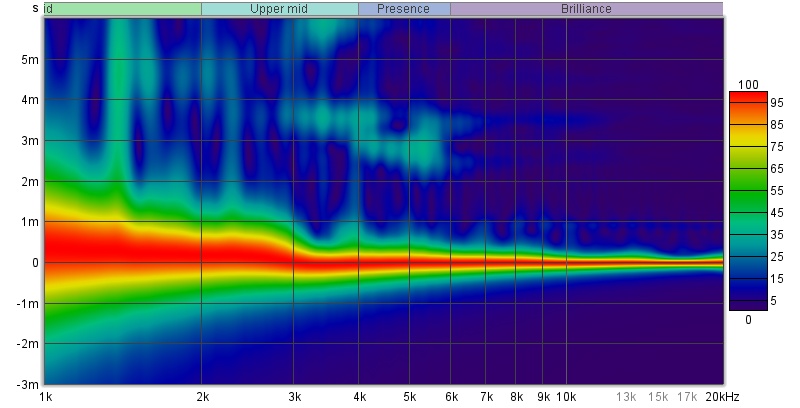 Fig 9 – Grandala Spectrogram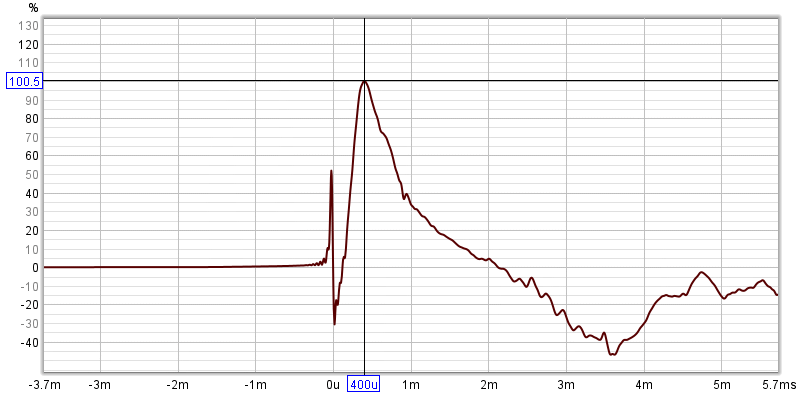
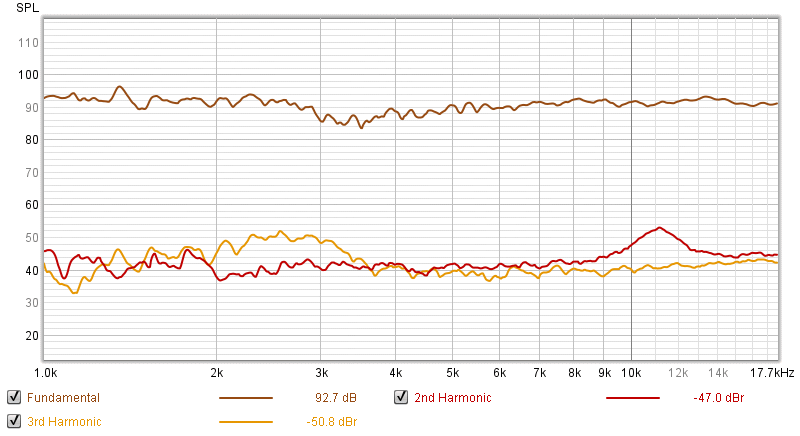 Fig 11 – Grandala Harmonic Distortion