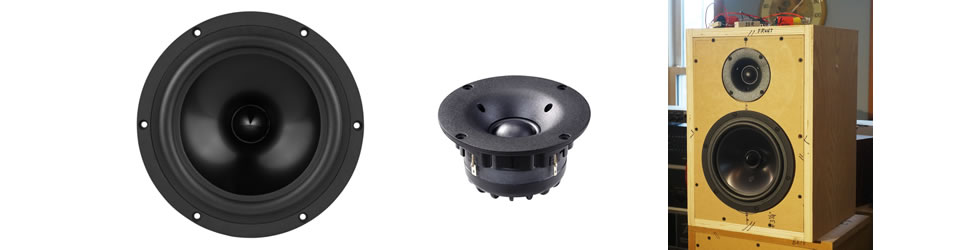
Finch-IIIA
Wavecor TW030WA12 with Dayton RS225-4
In the previous Finch IIA, the HiVi F8 couldn’t extend high enough to get a flat response. The Finch-IIIA attempts to do just that. In this iteration, I replaced the F8 with a Dayton RS225-4 woofer.
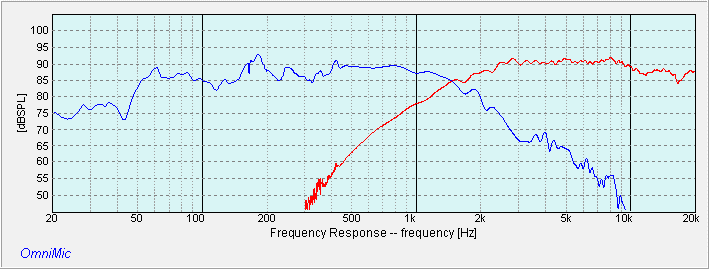 Fig 1 – Dayton RS225-4 (Blue) with Wavecor TW030WA12 (Red) Fig 1 – Dayton RS225-4 (Blue) with Wavecor TW030WA12 (Red)
After a few attempts, I finally settled on crossing the two drivers at 1.5kHz (Fig 1). This is a much higher frequency than the Finch-IIA which was at 1kHz.
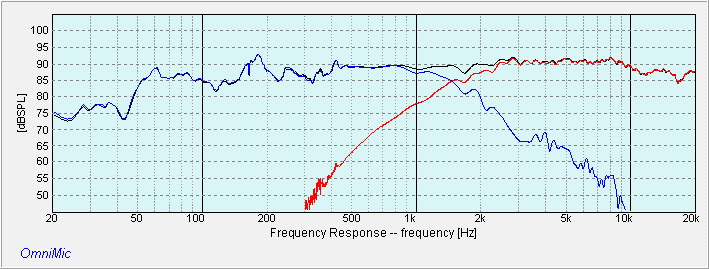 Fig 2 – Summing region (Black) Fig 2 – Summing region (Black)
The two drivers sum well (Black plot in Fig 2). No cancellations in the summing region are observed on either side of 2kHz.
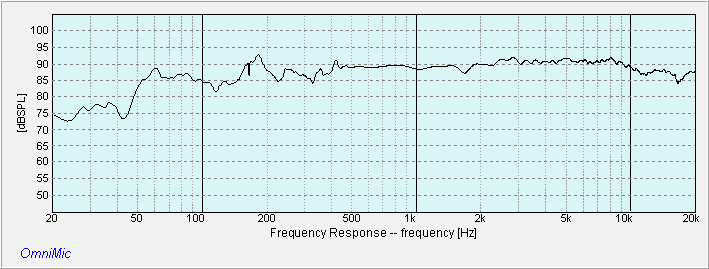 Fig 3 – Finch-IIIA Frequency Response Fig 3 – Finch-IIIA Frequency Response
The final response of the Finch-IIIA is incredible. This is what I’ve been aiming for. She is flat from 500Hz upwards (Fig 3). In the upper treble, she starts to dip at 8kHz, finally resting at 20kHz (-5dB). I will leave her as she is because there’s not much information up there.
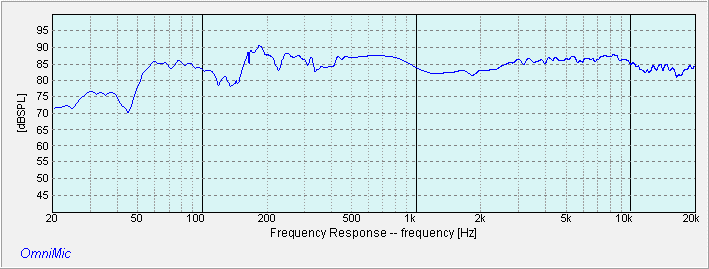 Fig 4 – Finch-IIA Frequency Response Fig 4 – Finch-IIA Frequency Response
Fig 4 is the response of the previous Finch-IIA. The -5db depression at 1.5kHz is glaring. While some listeners may prefer this, as a designer, I strive for a flat response.
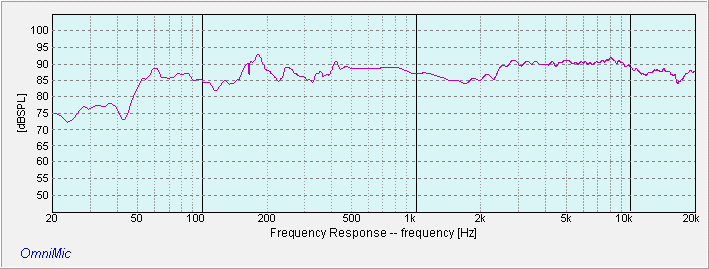 Fig 5 – Finch-IIIA Null Response Fig 5 – Finch-IIIA Null Response
Fig 5 is the null response of the Finch-IIIA. The notch shows the drivers are not perfectly aligned but I didn’t pick up any phasing issues during auditioning.
Actually, the Null response looks similar to the Finch-IIA. So, if you prefer this kind of response (aka BBC dip), simply flip the tweeter wires around. Better still, use a toggle switch.
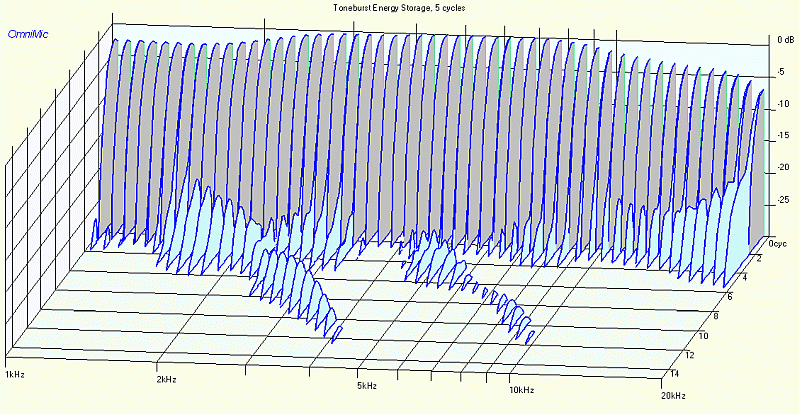 Fig 6 – Finch-IIIA Toneburst Energy Storage Fig 6 – Finch-IIIA Toneburst Energy Storage
The Toneburst plot (Fig 6) shows the artifacts when the z-axis is expressed in cycles. Some artifacts are seen after 2kHz but they are nothing to worry about.
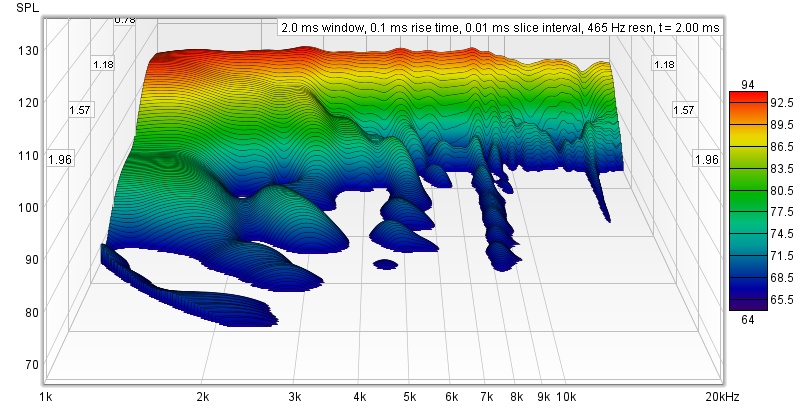 Fig 7 – Finch-IIIA Waterfall Fig 7 – Finch-IIIA Waterfall
The Waterfall plot (Fig 7) shows the artifacts this time expressed in the time domain (z-axis). The prominent ones are at 5kHz and 8.5kHz. They won’t affect the treble because they don’t last more than 2msec.
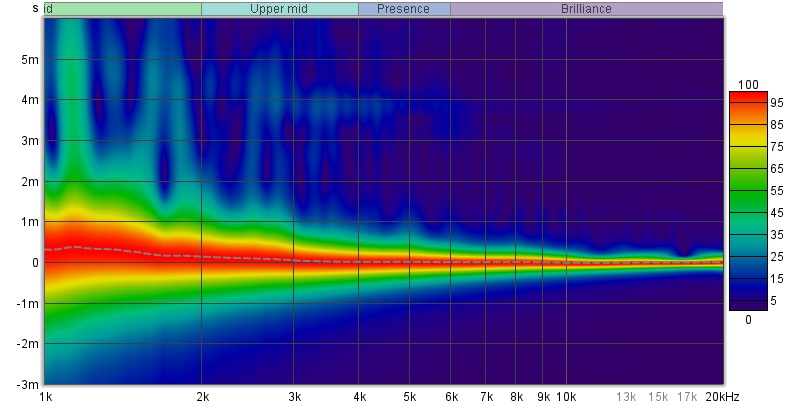 Fig 8 – Finch-IIIA Spectrogram Fig 8 – Finch-IIIA Spectrogram
Fig 8 is the Spectrogram of the Finch-IIIA. As expected, the artifacts in the treble above 2kHz don’t last more than 2msec. From 3kHz onwards, they are below 1msec.
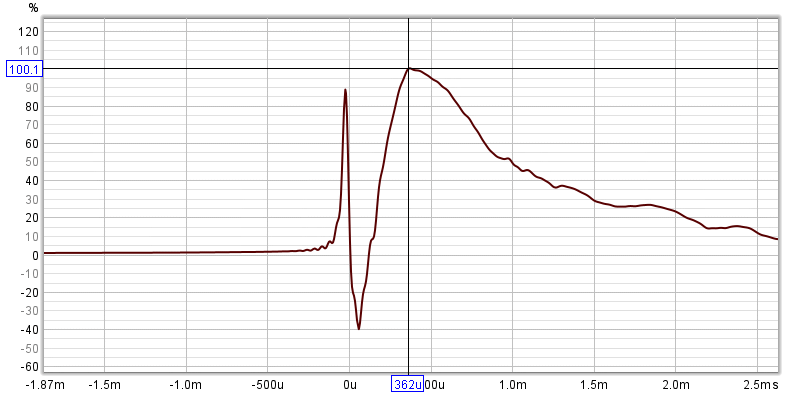 Fig 9 – Finch-IIIA Step Response Fig 9 – Finch-IIIA Step Response
Fig 9 is the Step Response of the Finch-IIIA. Astute readers will notice that the tweeter and the woofer are both wired in phase. Even though the woofer is behind the tweeter by 362usec, the bass doesn’t lag the midrange during listening test. If I want to bring the woofer closer to the tweeter, I will have to resort to using a sloping front panel or a step for the woofer. I will leave that for another day because I doubt I can hear the difference.
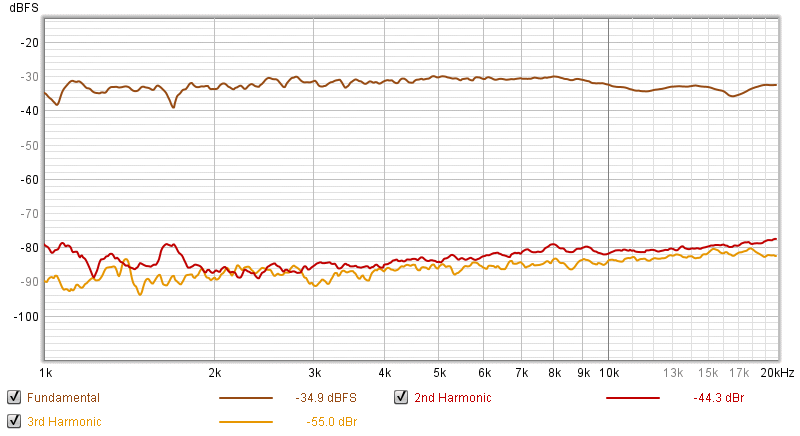 Fig 10 – Finch-IIIA Harmonic Distortion Fig 10 – Finch-IIIA Harmonic Distortion
Fig 10 is the Harmonic Distortion of the Finch-IIIA. The distortion is nothing to worry about. 2nd harmonic is -44.3dB whereas the 3rd is even lower at -55dB.
Sound of Finch-IIIA
The Finch-IIIA did not impress me initially. Though her response is flat, she sounded ordinary. Here I am with an expensive tweeter and yet I’m not hearing anything outstanding. I played music for a couple of weeks hoping that she’ll improve but to no avail. At this level, I can’t live with her.
Before I discard this design, I decided to modify the crossover. I was hesitant to do this when I started because it will add to the cost. However, there are times where it’s unavoidable.
After some tweaking, I managed to get the Finch-IIIA to “sing”. Now, the music jumps out. The dynamics, clarity and timing are all there. This is what I’ve been striving for
To test for attack, I put on Santana Corazon Saideira (Spanish version). The opening of this track is particularly useful. Either the music flies or it doesn’t. The Finch-IIIA passed with flying colors.
For sibilance, I listened to Girl in the Other Room (Diana Krall). No issues at all. The sibilance is audible but sounds smooth and fine. Not sandpaper like. There’s also excellent separation between her voice and the bass. No veil over her vocals.
Summary
Designing an 8″ 2-way is difficult but I succeeded because of the Wavecor TW030WA12. This is the only tweeter I have that allows me to cross at an absurdly low of 1.5kHz. Yes, she’s pricey but quality is not cheap.
Another feature that needs mentioning is no Baffle Step network is used in the crossover because the step wasn’t so severe that demanded it. As such, the resultant sensitivity is at an astonishing 90dB. This will appeal to chip and tube amp lovers.
I am so pleased with the Finch-IIIA that I highly recommend her. She is way better than her predecessor, the Finch-II and IIA. In those designs, the HiVi F8 fell short. That’s not to say the F8 is a bad woofer. Used as a bass unit in a 3-way, she’ll sound great.
Unless otherwise stated, all measurements were made in Full Space (4pi). Mic at 36 ins, tweeter axis. Impulse Window=5ms. No smoothing applied. |